Chinese Authorities Deploy Heavy Security During Ganden Ngamchoe Festival in Lhasa
Chinese authorities deployed heavy police and paramilitary forces around Jokhang Temple in Lhasa during the Ganden Ngamchoe festival, with military surrounding the temple in ‘three levels’ and strict restrictions on religious gatherings.
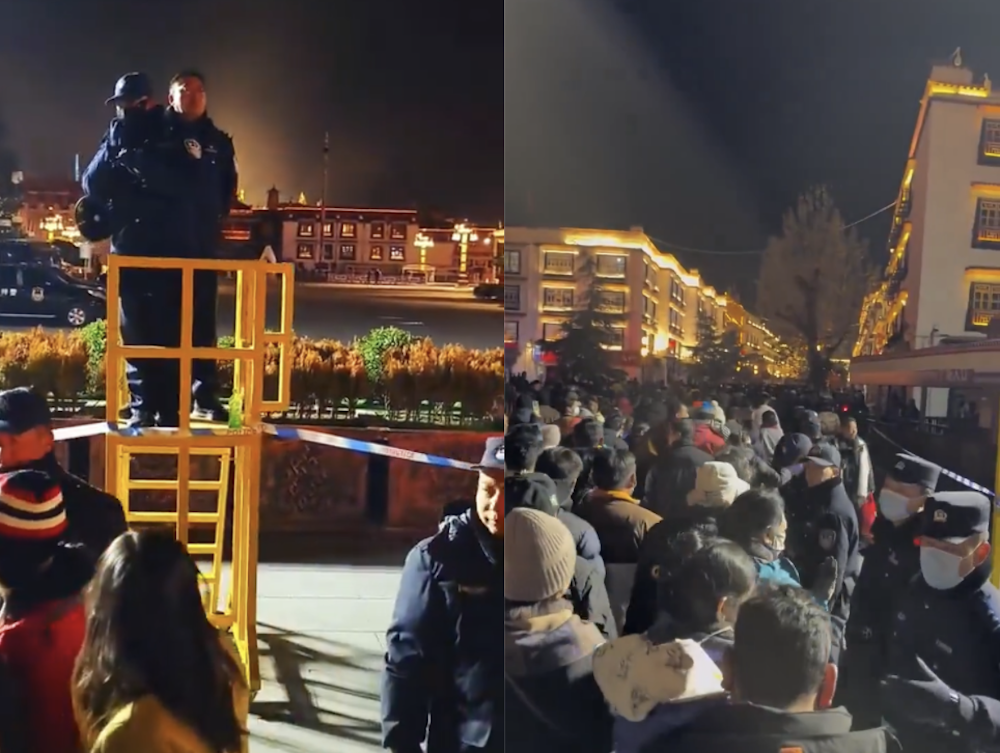 Police and paramilitary forces seen deployed in Lhasa during religious festival of Gaden Ngamchoe
Heavy Security Presence at Sacred Festival
Chinese authorities deployed heavy police and paramilitary forces in Lhasa on December 15, 2025, during the annual Ganden Ngamchoe festival—a significant religious observance honoring Je Tsongkhapa, founder of the Gelug school of Tibetan Buddhism.
The festival, celebrated on the 25th day of the 10th month of the Tibetan lunar calendar, traditionally involves lighting butter lamps, circumambulating monasteries, and offering prayers at major religious sites, particularly the Jokhang Temple.
‘Three Levels’ of Security
Images and video footage shared on social media described the atmosphere around Jokhang Temple as intensely tense. One post stated: “It is supposed to be a sacred and peaceful day for religious beliefs. However, the Chinese Communist Party authorities have turned it into a day of extreme tension and paranoia.”
Military and police forces surrounded the Jokhang Temple in “three levels,” illustrating what observers describe as expanding reliance on coercive tactics to suppress religious expression.
Strict Controls and Restrictions
According to Tibetan sources and Radio Free Asia, security deployments during this festival follow established patterns:
- Armed and unarmed police, People’s Armed Police members, and paramilitary units positioned around key religious sites
- Multiple checkpoint layers along major roads and narrow streets
- Officers routinely checking identification and questioning individuals
- Temporary inspection booths with continuous neighborhood patrols
- Restricted monastery access, with entry permitted only in small numbers
Police reportedly actively discouraged Tibetans from congregating in large groups. Devotees attempting communal butter lamp lighting or prayer activities were frequently instructed to disperse quickly.
Pattern of Suppression
While officials justify such measures as necessary for crowd control and public safety, observers contend the restrictions deliberately minimize public visibility of Tibetan religious devotion.
The security deployment reflects broader Chinese policy aimed at exerting tight control over Tibet’s religious institutions and cultural identity. Similar measures routinely appear during other major religious dates, Tibetan historical anniversaries, and politically sensitive periods.
Source: Phayul