Dutch Parliament Supports Tibet
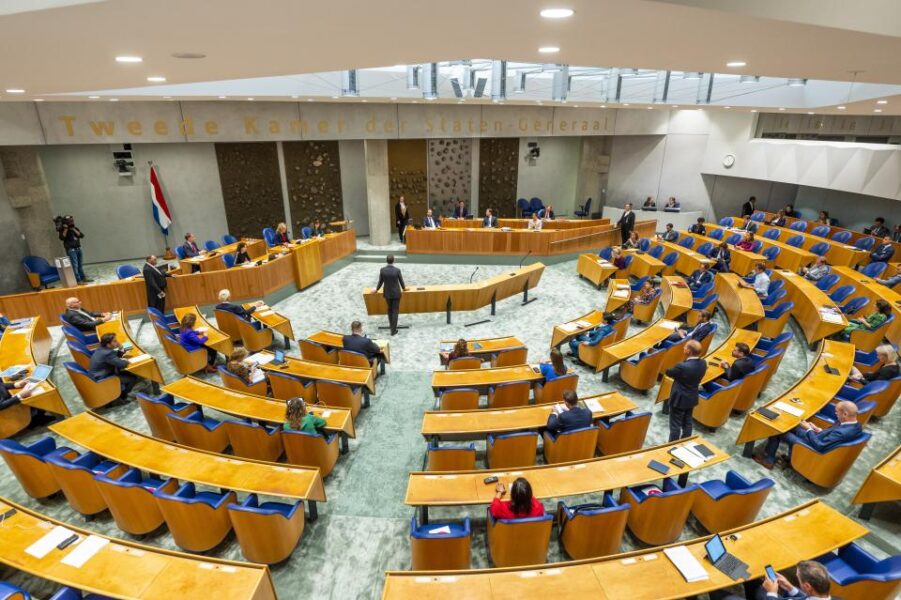
Dutch Parliament Supports Tibet and Calls on Government to Take Action Toward China
The Dutch House of Representatives today adopted three important motions on Tibet by a large majority. Parliament calls on the cabinet to ‘work toward a special EU representative and a joint EU Tibet strategy, modeled after the American Resolve Tibet Act (adopted in 2024 by both major American parties).’ Additionally, parliament calls on the cabinet in a motion to make clear to China that China must not interfere with the succession of the Dalai Lama, about which news is expected this year. In a third adopted motion, the cabinet is called upon to hold China accountable for discrimination, intimidation, criminalization, re-education, and imprisonment of Tibetans, Uyghurs, Christians, and other minorities.
Broad Political Support for Tibet
During the China debates on 12 February and 9 April, the parliamentary groups of NSC, D66, CDA, GL-PvdA, and DENK explicitly expressed their concerns about the oppression of the Tibetan people and religious repression in Tibet by China. They also emphasized the importance of Dutch and European alignment with the American Tibet Resolve Act, which was adopted in 2024 on the initiative of both parties in the US.
Reactions from Tibet Organizations
Tsering Jampa, chairman of the Tibet Support Group NL, is hopeful: “We are very pleased that the House of Representatives, for the first time in years, is so actively committed to alleviating the suffering of the Tibetan people. There are new opportunities to increase pressure on China. Now the government must take action and make meaningful steps within Europe and with other countries that share our concerns about China’s oppression of Tibet.”
Wangpo Tethong, director of the International Campaign for Tibet in Europe: “On behalf of the tens of thousands of Dutch supporters of Tibet, I would like to thank the House of Representatives for their principled stance on Tibet. ICT Europe welcomes the support for the Tibetan people and the Dalai Lama in the Netherlands—support that reflects the broader international awareness of the importance of Tibet for peace in Asia, as we also see in the European Parliament and the American Congress.”
Recent Developments Regarding Tibet
The Chinese occupation of Tibet has now lasted 75 years. On 10 March, thousands of Tibetans in Europe commemorated this with a large demonstration in The Hague. Richard Gere, chairman of the International Campaign for Tibet, and members of parliament Jan Paternotte (D66) and Isa Kahraman (NSC) also spoke there.
On 9 October, the President of the Tibetan government in exile in India, Sikyong Penpa Tsering, visited the Netherlands and had a meeting with the House of Representatives.
In December 2023, the European Parliament adopted a sharp resolution on Tibet, strongly condemning Chinese repression and cultural oppression in Tibet and calling for policies and sanctions against China.
Background Information on the Chinese Occupation of Tibet
As a result of China’s occupation of Tibet:
1. More than 1 million Tibetans killed since 1950
According to estimates by the Tibetan government in exile, more than 1.2 million Tibetans—one-sixth of the population—have perished as a direct result of the Chinese invasion and subsequent occupation. These deaths were the result of executions, imprisonment, torture, famine, and military conflicts.
2. More than 6,000 monasteries destroyed
During the Cultural Revolution (1966–1976), the Chinese government systematically destroyed more than 6,000 Tibetan Buddhist monasteries. This was not merely religious repression—it was a campaign aimed at dismantling the foundations of Tibetan culture, history, and identity.
3. Tibet ranks among the least free regions in the world
According to Freedom House (2024), Tibet scores 1 out of 100 points in terms of political and civil liberties—the worst possible score, on par with Syria and South Sudan. This includes near-total restrictions on religious practice, freedom of expression, freedom of movement, and political opposition.