80 Tibetans arrested after peaceful protest against illegal gold mining; EU parliament condemns mass arrests
Mass detention following environmental protest
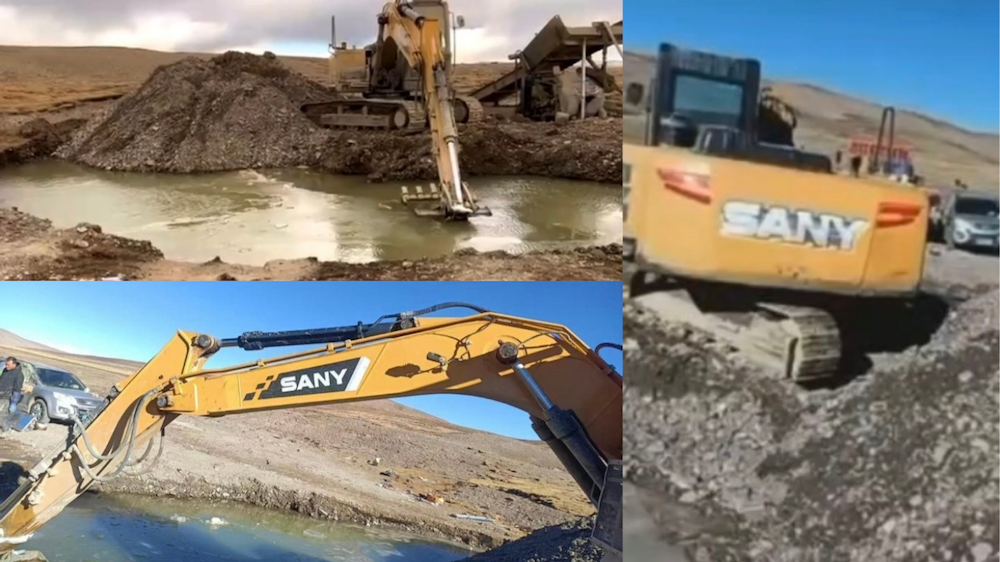 Mining operations at the site in Kham Zachuka. Photo shared by local residents. Credit: Phayul
Chinese authorities detained approximately 80 Tibetans in the village of Kashi, Kham Zachuka, Sershul district, on 6 November 2025, following peaceful protests against illegal gold mining operations. Seven individuals remain missing; their whereabouts are unknown.
Local residents discovered unauthorized gold mining operations in an area called Serkhok (Gold Valley) on 5 November. When Tibetans protested and notified township authorities the following day, Chinese officials responded with mass arrests around 6:50 PM.
“Authorities carried out systematic, house-by-house arrests,” revealed Tempa Gyaltsen Zamlha, deputy director of the Tibet Policy Institute, during a press conference on 17 December in Dharamsala.
Reports of harsh treatment
According to sources, detainees were subjected to harsh conditions, including:
- Sleep deprivation and limited toilet access
- Minimal daily rations of cold barley meal mixed with water
- Reports of broken ribs and kidney problems from mistreatment
- Forced pledges not to protest against mining prior to release
Authorities implemented communications blackouts, deployed armed personnel, conducted house searches, confiscated phones, and installed surveillance equipment. Officials warned residents that discussing the incident would constitute a serious criminal offense.
European Parliament condemns crackdown
The Interparliamentary Group for Tibet in the European Parliament, chaired by MEPs Dainius Žalimas and Hannes Heide, issued a formal condemnation on 18 December 2025.
The co-chairs called on China to:
- Immediately de-escalate the situation
- Release all detainees
- Refrain from mass arrests against nonviolent protesters
- Allow transparent and independent investigations
- Engage in meaningful consultation with affected Tibetan communities
“Criminalizing environmental protest constitutes a serious violation of fundamental rights, including freedom of expression, peaceful assembly, and environmental protection,” the statement emphasized.
Rigzin Genkhang, representative of the Office of Tibet Brussels, welcomed the statement: “Such principled international engagement is urgently needed and must be followed by concrete actions.”
Tibetan exile NGOs demand action
On 19 December, a coalition of five major Tibetan NGOs organized a demonstration on the main square of McLeod Ganj in Dharamsala. The Tibetan Youth Congress, the Tibetan Women’s Association, the National Democratic Party of Tibet, the Gu Chu Sum Movement Association of Tibet, and Students for a Free Tibet India formulated five demands:
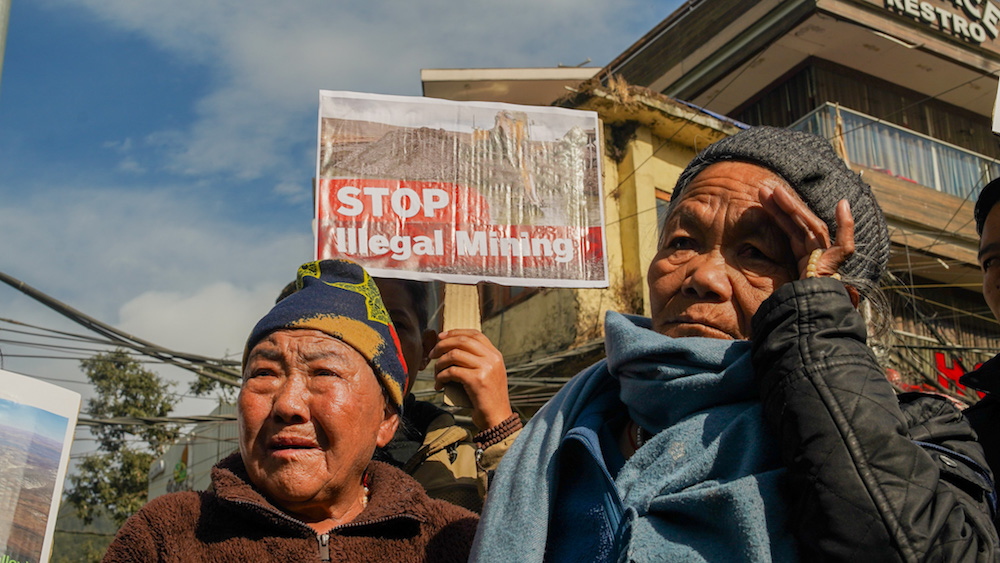
- Stop the environmental destruction of the Tibetan plateau
- Unconditionally release all detained and imprisoned Tibetans
- Account for disappeared individuals and bring them back safely
- End mining projects without informed community consent
- Strengthen international oversight of Tibet’s ecosystem and human rights situation
“The situation in the village of Kashi is critical and requires immediate international attention,” the groups declared.
Broader context
Mining activities in the region have existed since the 1990s, with residents citing environmental damage to rivers, grasslands, and sacred sites. The recent crackdown highlights the ongoing tension between China’s resource extraction policies and the environmental and cultural concerns of Tibetan communities.
Sources: Tibet Watch, Tibet.net, Phayul