New Chinese law on ethnic unity legitimizes assimilation of Tibetans
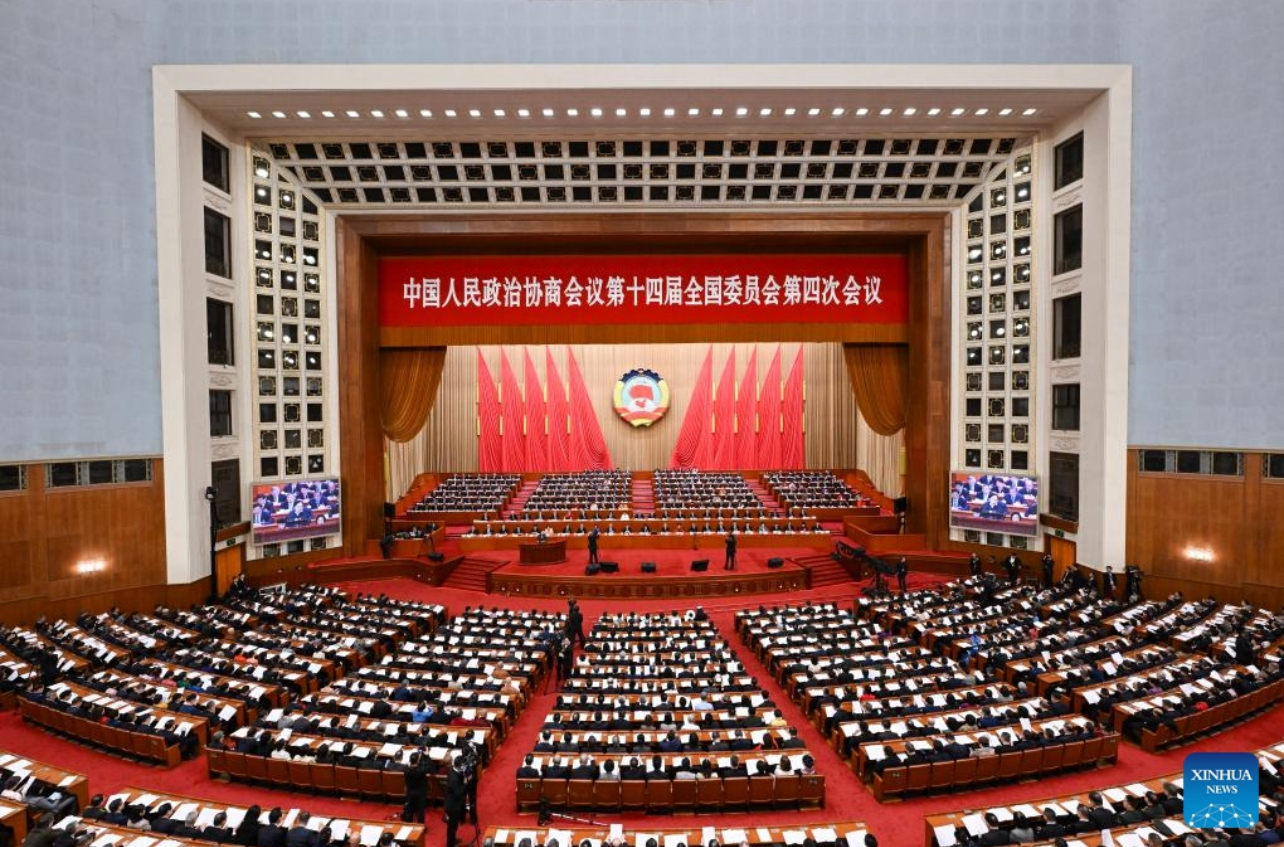 The third plenary session of the 14th National Committee of the Chinese People’s Political Consultative Conference
With the adoption of the Law on Promoting Ethnic Unity and Progress on March 12, 2026, China has taken a new legal step in a long-standing policy of cultural assimilation. What the Chinese government presents as a law for “harmony” and “development” is seen by human rights organizations as an instrument to strengthen ideological control and further suppress minorities.
Broad legal framework for repression
According to Human Rights Watch, the law provides a broad legal framework to justify and expand existing repressive measures. Maya Wang, deputy Asia director at Human Rights Watch, warns that the law is not truly aimed at equality, but at enforcing assimilation. The International Campaign for Tibet states that the law constitutes an explicit legal break with the principle of preferential treatment for minorities, as enshrined in the Chinese constitution.
The law obliges not only the state, but all of society — from schools and businesses to families — to actively contribute to a “common consciousness of the Chinese nation.” Critics point out that these vague formulations can be used to label any form of dissenting opinion as a threat to “unity.”
Marginalization of minority languages
A central element of the law is the further marginalization of minority languages. Mandarin is emphatically positioned as the dominant language in education and public space — children must master Mandarin before kindergarten. In Tibet, this aligns with an existing practice in which Tibetan children are sent on a large scale to boarding schools where they are primarily taught in Chinese. An estimated more than one million Tibetan children now reside in such institutions, with major consequences for the transmission of language and culture.
Ideological formation and extraterritorial claims
The law places a strong emphasis on ideological formation. Parents and schools are expected to raise children in loyalty to the state and the Communist Party, while the dissemination of ideas considered “harmful to ethnic unity” is prohibited. This directly affects fundamental freedoms such as freedom of expression, religion, and education.
Particularly concerning is the law’s claim of extraterritorial reach. The law explicitly targets foreign organizations and individuals who “commit acts directed against the People’s Republic of China that undermine ethnic unity and progress.” This means that Tibetans and their supporters worldwide could come under pressure when they speak out about human rights violations.
International criticism
The UN High Commissioner for Human Rights has expressed concerns about the law. The International Campaign for Tibet raised the issue at the 61st session of the UN Human Rights Council in Geneva. International observers view the law as the codification of a broader political course under President Xi Jinping: replacing cultural diversity with imposed national uniformity.
For Tibet, the impact is particularly great. The law builds on previous measures — such as restrictions on religious practices, monitoring of monasteries, and the reduction of education in the Tibetan language — and now gives them an explicit legal basis. This development is at odds with international treaties that China itself has signed, including the UN Convention on the Rights of the Child and the International Covenant on Economic, Social and Cultural Rights.
The new law underscores how urgent it is that the international community continues to speak out. For organizations such as Tibet Support Groep Nederland, this means that the work for the protection of the Tibetan language, culture, and fundamental rights not only remains necessary, but is more urgent than ever.
Sources
- China: Draft 'Ethnic Unity' Law Tightens Ideological Control
- New PRC Ethnic Unity and Progress Law enforces assimilation of Tibetans, contradicts national and international law
- ICT condemns China's repression in Tibet, troubling Ethnic Unity law at the 61st Session of the United Nations Human Rights Council
- China passes ethnic unity law critics say threatens minority rights
- China's new ethnic unity law could target minorities, say rights groups
- UN rights chief red flags China's ethnic unity law