Coalition sounds the alarm in The Hague over Chinese law threatening languages and cultures
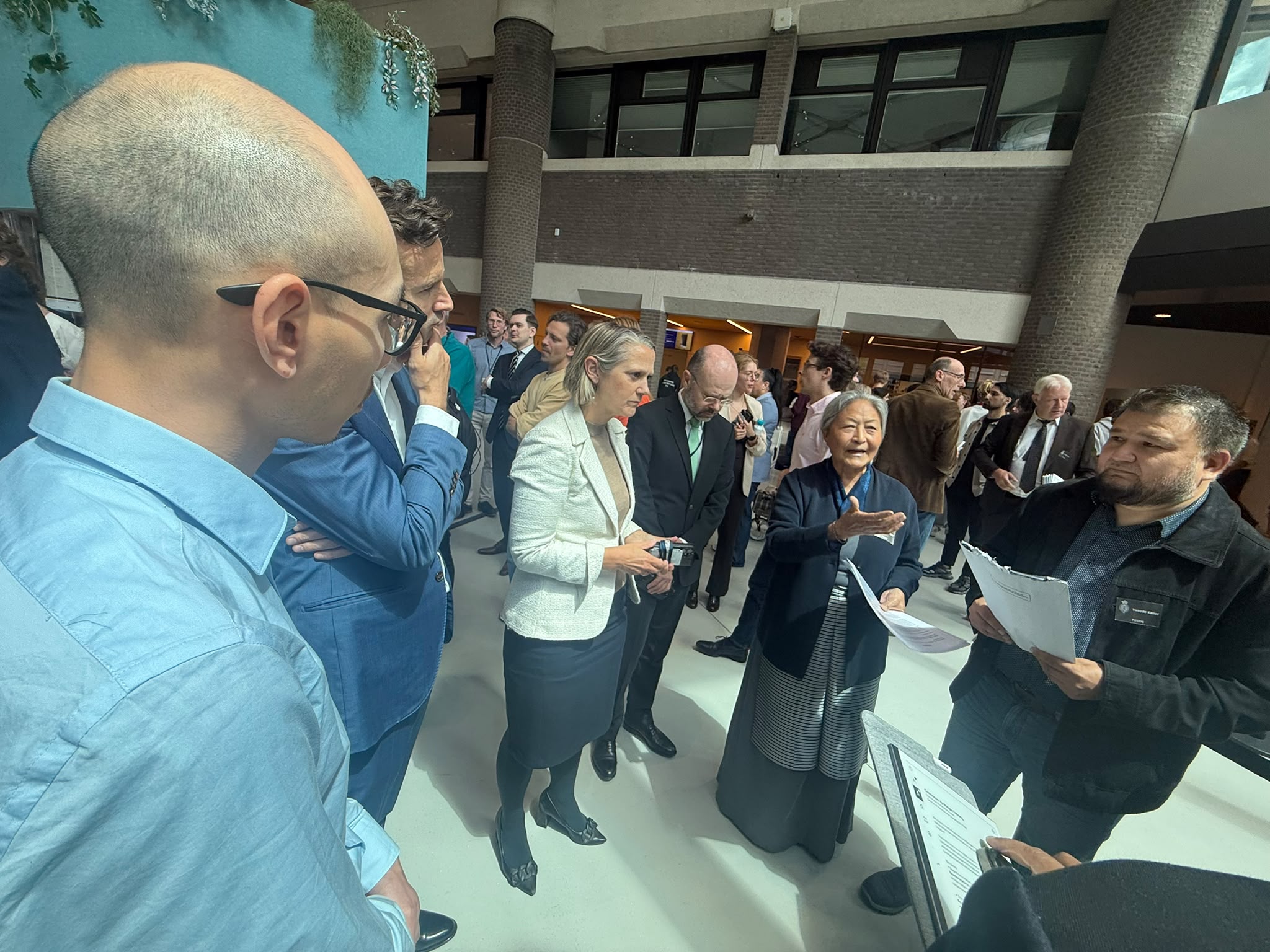
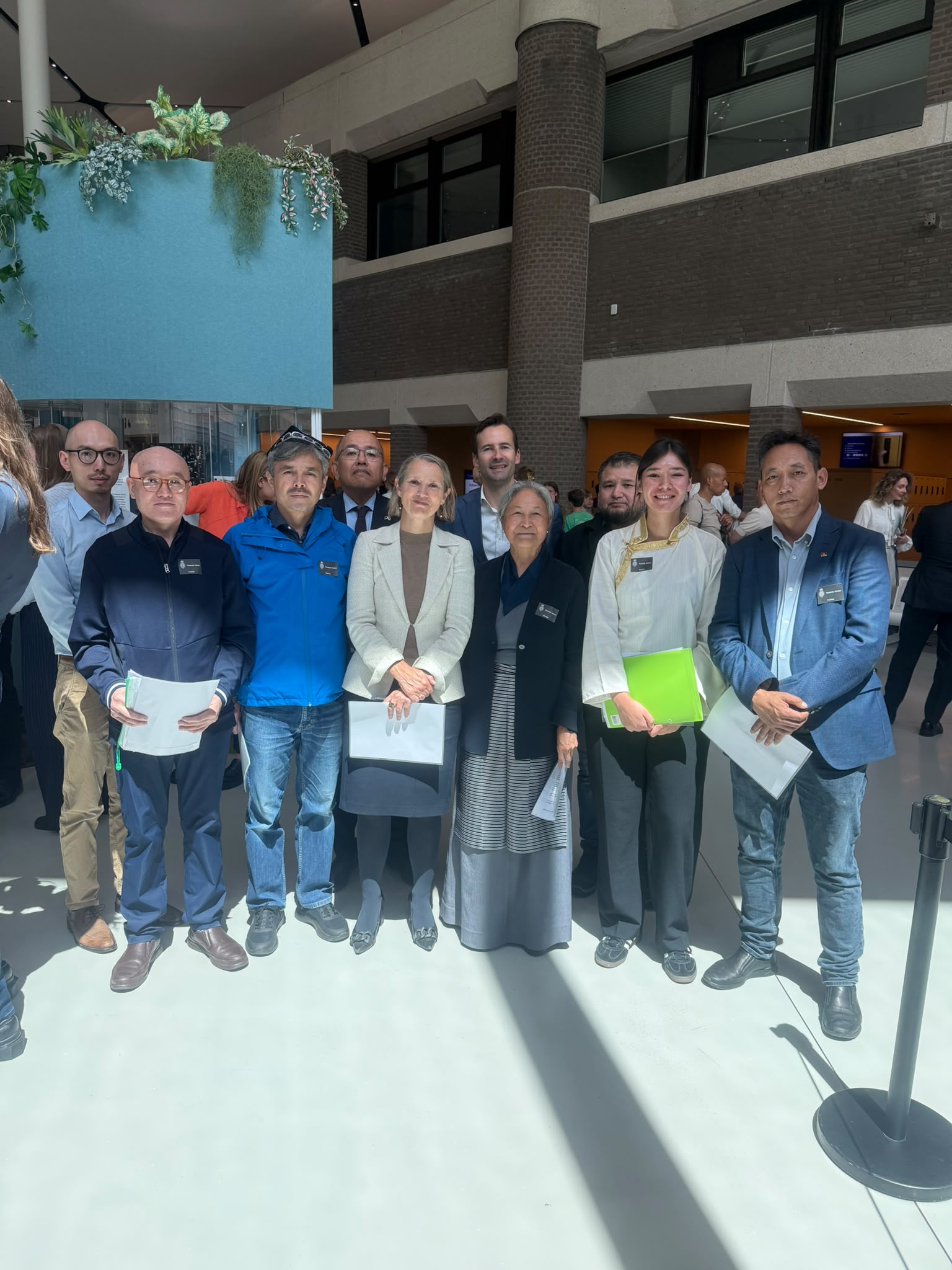 Representatives of the coalition present the petition to members of the Standing Committee on Foreign Affairs of the Dutch House of Representatives, The Hague, 9 June 2026.
On 9 June, Tibetan, Uyghur, Southern Mongolian, Hong Kong and other human rights organisations sounded the alarm in The Hague over a new Chinese law that acutely threatens the survival of their languages, cultures, religions and identities.
The coalition — consisting of, among others, the International Campaign for Tibet, Tibet Support Group NL, Students for a Free Tibet NL, Tibetan Community NL, South Mongolia Congress, Netherlands for Hong Kong, NGO DEI, the Free Uyghur Association and the Europe East Turkestan Education Centre Foundation — presented a petition to members of the Standing Committee on Foreign Affairs of the Dutch House of Representatives.
The cause is China’s new Law on Promoting Ethnic Unity and Progress, which was adopted on 12 March and takes effect on 1 July. Behind the official language of “unity” and “progress” lies a policy that increasingly subjects ethnic and religious communities to the dominant Chinese language, culture and state ideology.
China is using this new law to put further pressure on Tibetans, Uyghurs, Southern Mongolians and other communities to give up their own language, culture, religion and identity and to conform to the dominant Chinese state ideology.
Under the guise of “ethnic unity”, the space for their own education, religious practice, use of language and cultural transmission is increasingly restricted. Children are raised in a system of forced boarding schools in which their own history, faith and identity are made subordinate to loyalty to the Chinese Communist Party and to a state-imposed Chinese national identity.
What is happening here is not the promotion of unity, but the enshrining in law of forced assimilation. China is using this law to further suppress the language, religion, culture and identity of Tibetans, Uyghurs, Southern Mongolians and other communities, and to replace them with loyalty to the Chinese state and the Communist Party.

For Tibetans, Uyghurs and Southern Mongolians, this means that their language is being driven out of education, their religious institutions are being placed under state control, their culture is being repackaged as folklore, and their identity may only continue to exist as long as it fits within the narrative of the Chinese state.
The organisations jointly called on Dutch parliamentarians to speak out clearly and to take concrete action before the law takes effect on 1 July.
Support the Tibet Support Group Netherlands in their struggle for justice and human rights in Tibet.
Sources
- International Campaign for Tibet – New PRC Ethnic Unity and Progress Law enforces assimilation of Tibetans
- NPC Observer – NPC 2026: China Enshrines Xi-Era Ethnic Policy in New Law
- Council on Foreign Relations – China's New Ethnic Unity Law: From Autonomy to Assimilation
- East Asia Forum – China's new ethnic unity law codifies its assimilationist shift
- Law on Promoting Ethnic Unity and Progress – Wikipedia