Dutch Parliament receives Tibetan leader despite protest from China
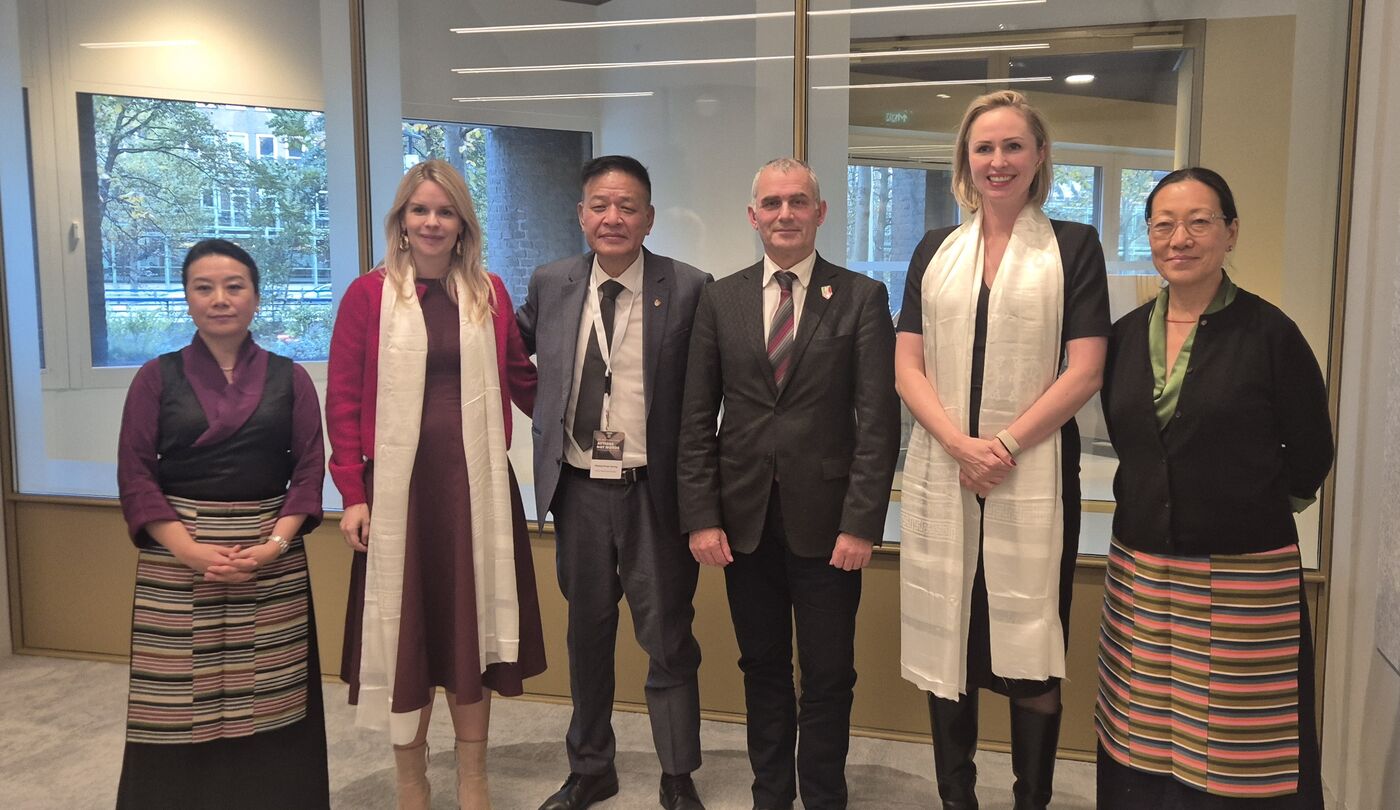
Sikyong Penpa Tsering at the Dutch House of Representatives with MPs Tom van der Lee, Hanneke van der Werf and Queeny Rajkowski, Representative Rigzin Genkhang and ICT President Tenchoe Gyatso.
One day before Sikyong Penpa Tsering was due to speak with the Dutch House of Representatives, the Chinese Embassy sent its members a letter urging them not to receive him. The meeting went ahead regardless.
It was typical of a visit that became a diplomatic and political success for Tibet. From 3 to 6 November, the democratically elected political leader of the Central Tibetan Administration was in the Netherlands. He addressed the annual summit of the Inter-Parliamentary Alliance on China (IPAC), held talks at the Ministry of Foreign Affairs, met the Foreign Affairs Committee of the House of Representatives, and spoke to Dutch and international media.
Address to the IPAC summit
On Thursday 5 November, the Sikyong addressed the sixth annual IPAC summit in The Hague, which brought together 52 parliamentarians from 30 countries across six continents. The summit was opened by the Dutch IPAC co-chairs, MPs Jan Paternotte and Tom van der Lee.
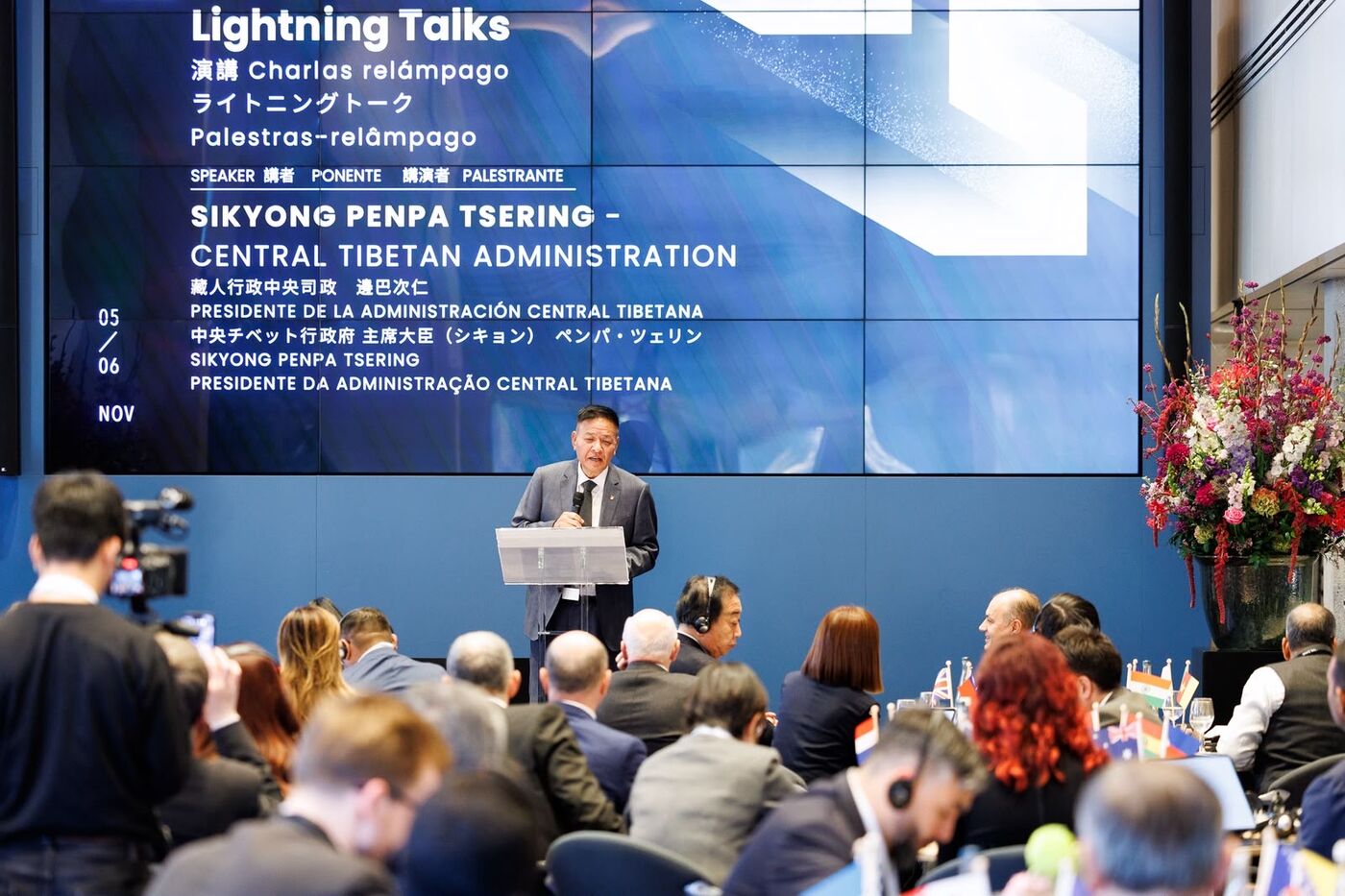
The Sikyong addresses the IPAC summit in The Hague. Photo: Central Tibetan Administration.
The Sikyong spoke about Tibet’s historical and legal status, China’s increasingly repressive policies, the threats to Tibetan language, religion and identity, and China’s interference in the reincarnation of His Holiness the Dalai Lama. He described the forced assimilation policy as cultural genocide. He reaffirmed the Central Tibetan Administration’s commitment to the peaceful Middle Way Approach, and urged parliamentarians to turn their expressions of support into concrete political action, including legislation modelled on the US Resolve Tibet Act.
He pointedly renewed the call for the appointment of an EU Special Representative for Tibet, an initiative also supported by the Dutch House of Representatives.
On the sidelines of the summit he met Jan Paternotte, MEP and IPAC co-chair Miriam Lexmann, and parliamentarians from Panama, Japan, Taiwan and the United Kingdom, among others.
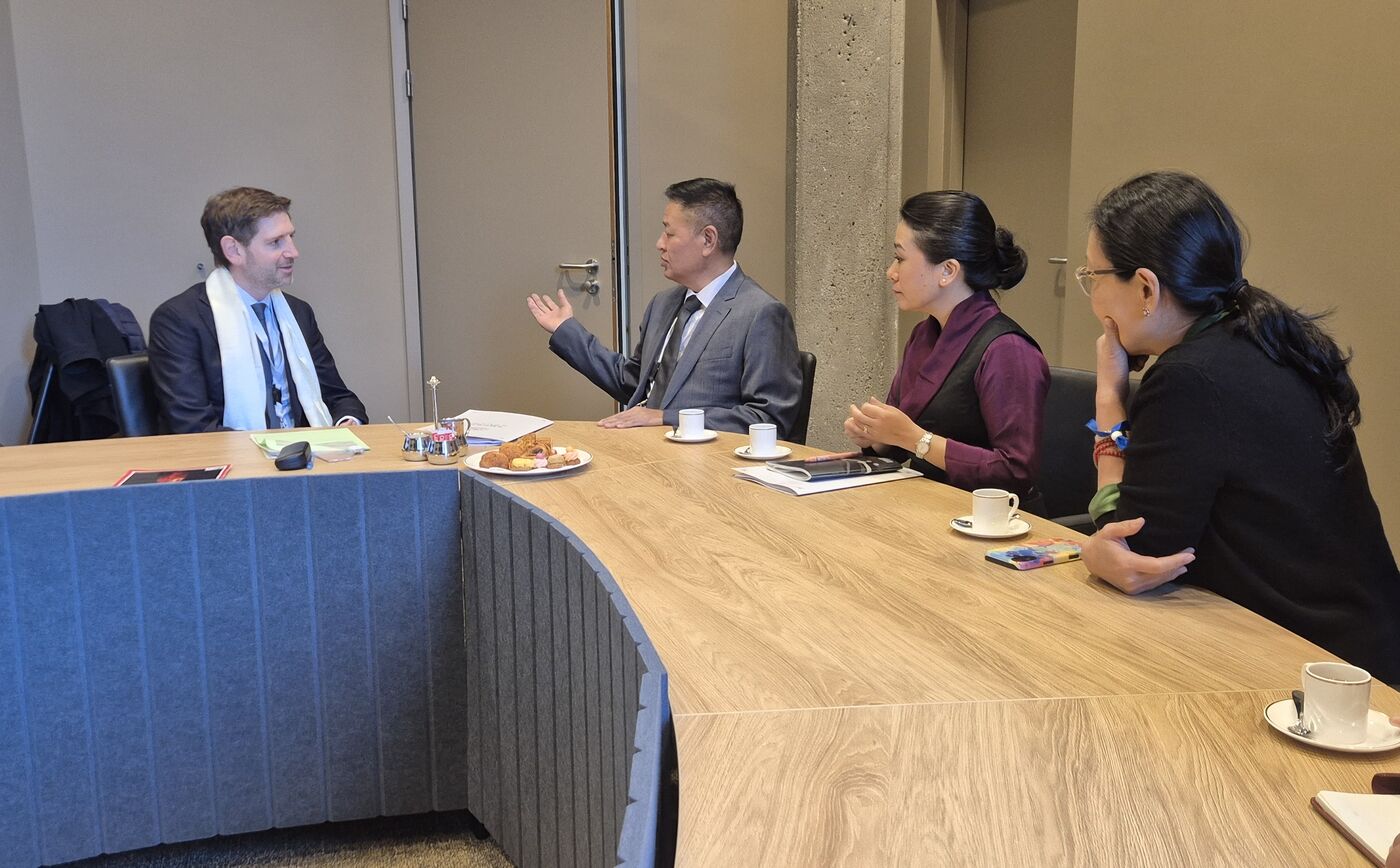
In conversation with MP and IPAC co-chair Jan Paternotte, on the sidelines of the summit.
Government and Parliament
With senior officials of the Ministry of Foreign Affairs, the Sikyong discussed strengthening Dutch support for Tibet. He particularly welcomed the fact that in July 2025 the Netherlands joined the statement by seven European countries affirming that Tibetan Buddhists themselves, without state interference, may identify the Dalai Lama’s successor.
A milestone was the formal meeting with the Standing Committee on Foreign Affairs on 5 November, held at the committee’s own invitation. The meeting in the Aletta Jacobs Room was public and livestreamed. Tom van der Lee (PRO) chaired it. Hanneke van der Werf (D66) and Queeny Rajkowski (VVD) also took part.
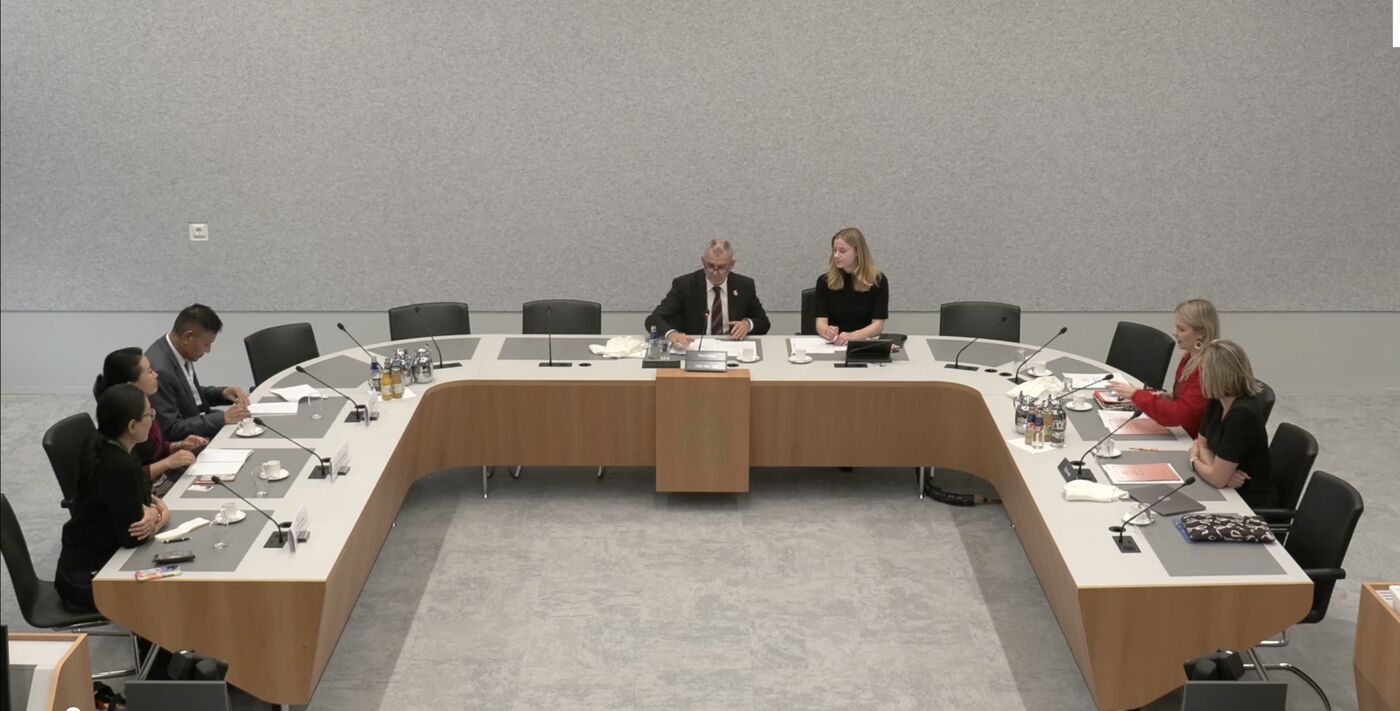
The Foreign Affairs Committee’s meeting with the Tibetan delegation, 5 November 2026. Image: via Central Tibetan Administration.
The discussion covered Tibet’s political and historical status, human rights violations, restrictions on religious freedom, the forced assimilation policy including the new Ethnic Unity Law, and the environmental consequences of China’s large-scale dam construction on Tibetan rivers. The Sikyong expressed his appreciation for the three Tibet motions the House adopted in April 2025 and encouraged further initiatives, particularly on the EU Special Representative for Tibet.
The Chinese Embassy’s letter
In a letter dated 4 November, the Chinese Embassy urged the committee members not to meet the Sikyong and not to give the Central Tibetan Administration a platform. The letter, published by the Tibetan news site Phayul, calls Tibet an inalienable part of China and a purely internal affair, and the Central Tibetan Administration a separatist organisation.
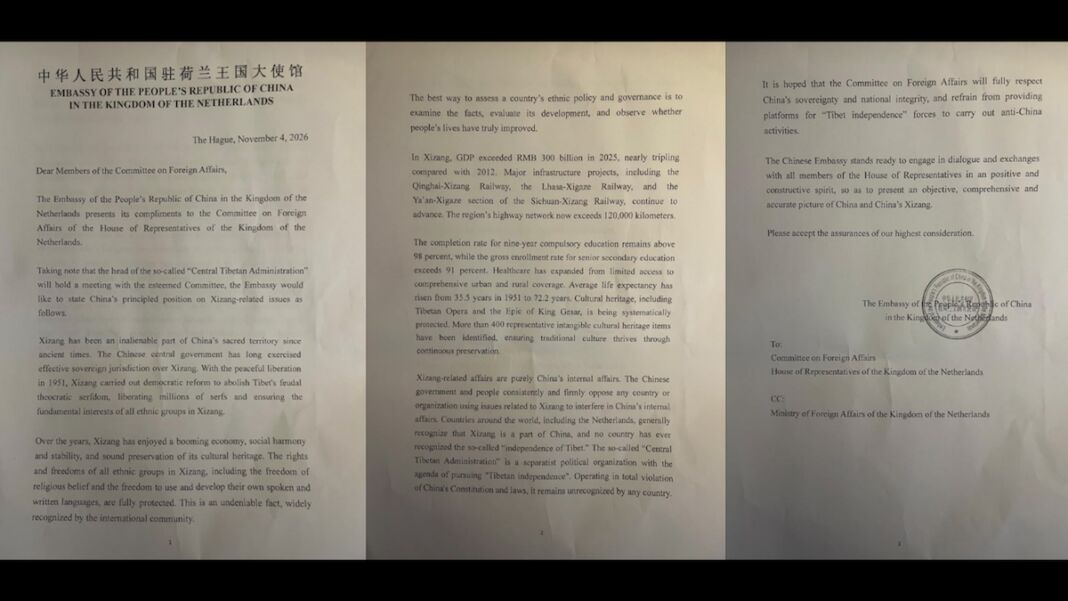
The Chinese Embassy’s letter to the members of the Foreign Affairs Committee. Image: Phayul.
The House was not deterred. That is a clear demonstration of parliamentary independence: a foreign embassy does not decide whom Dutch elected representatives speak to.
Media
The Sikyong gave interviews to Associated Press, La Libre Belgique and The Independent, among others, and took part in a roundtable with Dutch journalists and China specialists. In those conversations he rebutted the Chinese account of Tibetan history and called on the Netherlands to use its economic weight as the gateway to Europe.
What comes next
The visit has raised Tibet’s visibility and strengthened political support. We are pleased that both the Dutch government and the House of Representatives stood up for their values and did not give in to Chinese pressure. That goodwill now has to be turned into policy. Tibet Support Group Netherlands will:
- stay in contact with engaged MPs and press for concrete follow-up, starting with the forthcoming parliamentary debate on China;
- work with our partners towards the appointment of an EU Special Representative for Tibet;
- keep drawing attention to the Ethnic Unity Law, religious freedom and the protection of Tibetan cultural identity.
Support Tibet Support Group Netherlands in its struggle for justice and human rights in Tibet.
Sources
- Dutch House of Representatives – Conversation with Penpa Tsering, political leader of the Central Tibetan Administration (CTA), 5 November 2026 (in Dutch)
- Central Tibetan Administration – Sikyong Delivers Keynote Address at the 6th Annual Summit of the Inter-Parliamentary Alliance on China
- Central Tibetan Administration – Sikyong Penpa Tsering Concludes The Hague Visit with Crucial Parliamentary Engagement on Tibet
- Phayul – Chinese Embassy in Netherlands attempts to dissuade Dutch officials from meeting CTA President
- Tibetan Review – China fails to pressure or school Dutch MPs on its version of the Tibet issue
- Inter-Parliamentary Alliance on China – IPAC The Hague 2026 Summit
- Boeddhistisch Dagblad – President Tibet: Nederland moet zijn slagkracht gebruiken richting China (in Dutch)
- Office of Tibet – Sikyong Penpa Tsering Begins Dutch Visit with Media Engagements Ahead of IPAC Summit
- Tibetan Review – Seven European rights envoys reject state interference in Dalai Lama succession
- Tibet Support Group Netherlands – Sikyong Penpa Tsering begins three-day visit to the Netherlands
- Tibet Support Group Netherlands – Dutch House of Representatives supports Tibet