Tibetan singer under strict surveillance after release for Dalai Lama tribute
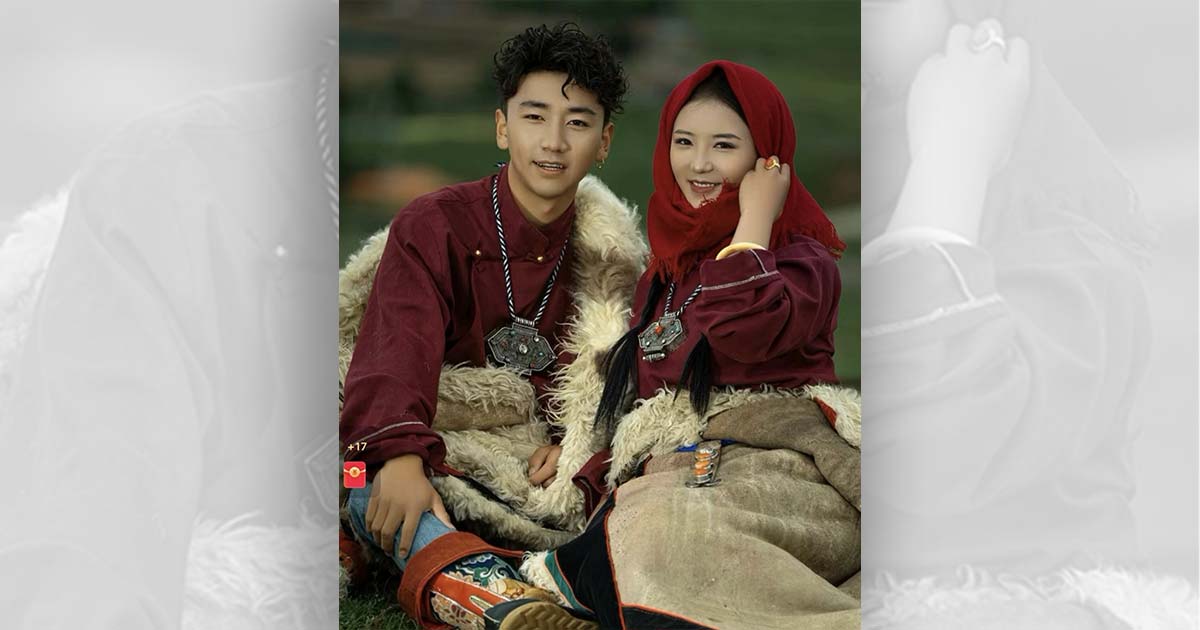 A-Sang with his wife after his release in early August 2025
Popular Tibetan singer A-Sang was released in early August 2025 after a month of detention, but remains under permanent police surveillance. His arrest on July 8 followed his performance of the song “Prince of Peace” in honor of the Dalai Lama’s 90th birthday. Local security services now prohibit him from livestreaming or communicating via Chinese social media.
Arrest for cultural expression
A-Sang, from Kashul Village in Ngaba County, Tibet, was detained by the Public Security Bureau of Ngaba County after performing a cover of “Prince of Peace,” originally sung by Tibetan artist Sher Ten. The song contains the following lyrics referring to the Dalai Lama:
“Born in Amdo, having set foot in central Tibet, whose activities are sustained from India, I miss you, the Prince of Peace.”
The young singer had more than 30,000 followers on Kuaishou, a Chinese social media platform. After his arrest, both his account and that of his wife were permanently blocked by Chinese authorities.
Systematic repression around the 90th birthday
A-Sang’s arrest fits into a broader pattern of repression surrounding the Dalai Lama’s 90th birthday on July 6, 2025. Despite strict Chinese controls, Tibetans within Tibet celebrated this milestone in various ways via social media. A woman from Dzoge, for example, placed a portrait of the Dalai Lama in her home with the message: “Today marks the auspicious and special 90th birthday of His Holiness the Great 14th Dalai Lama.”
Besides A-Sang, several other Tibetan artists were detained. Monk Tsewang Dhonko from Adu Monastery was arrested around July 1 for sharing symbolic images. Singer Palchung, who collaborated with A-Sang, was also detained. Both have since been released but remain under surveillance.
Digital censorship reinforces cultural repression
The blocking of A-Sang’s social media accounts illustrates China’s increasing digital censorship against Tibetan cultural expression. Platforms such as Kuaishou, Douyin, and Bilibili have systematically imposed restrictions on Tibetan-language content. Livestreams and videos in Tibetan are routinely removed, erasing digital expressions of culture.
After his release, his wife posted a message on Kuaishou: “We are here to report that we are safe. Thank you to our fans for your concern over the past two months. We will be back online soon.” However, this hopeful message stands in stark contrast to the reality of permanent surveillance and communication restrictions.
Fragile Chinese control over Tibet
ICT President Tencho Gyatso stated that “A-Sang’s detention and restricted release for singing a song expressing respect and longing for the Dalai Lama underscores the underlying fragility of Chinese rule in Tibet.” These repressive tactics are applied in combination with large-scale propaganda visits, such as Xi Jinping’s recent trip to Tibet, to create the illusion of broad public support for the Communist Party.
The treatment of A-Sang and other Tibetan artists demonstrates that China’s control over Tibet depends on the systematic suppression of cultural expression. The fact that a simple song leads to months of detention and permanent surveillance reveals Beijing’s deep insecurity about its grip on the region. The continued celebration of the Dalai Lama by Tibetans, despite severe risks, proves that sixty years of Chinese occupation have not been able to break Tibetan resistance.
Sources
- Tibetan singer on restricted release after broadcasting song celebrating Dalai Lama's 90th birthday
- Tibetan monk, singer released after detentions linked to Dalai Lama's birthday celebrations
- China arrests Tibetan singer for performing at Dalai Lama's 90th birthday celebration
- In Tibet, heightened security and intimidation surround the Dalai Lama's 90th birthday
- China nets young Tibetan singer in Dalai Lama birthday crackdown